

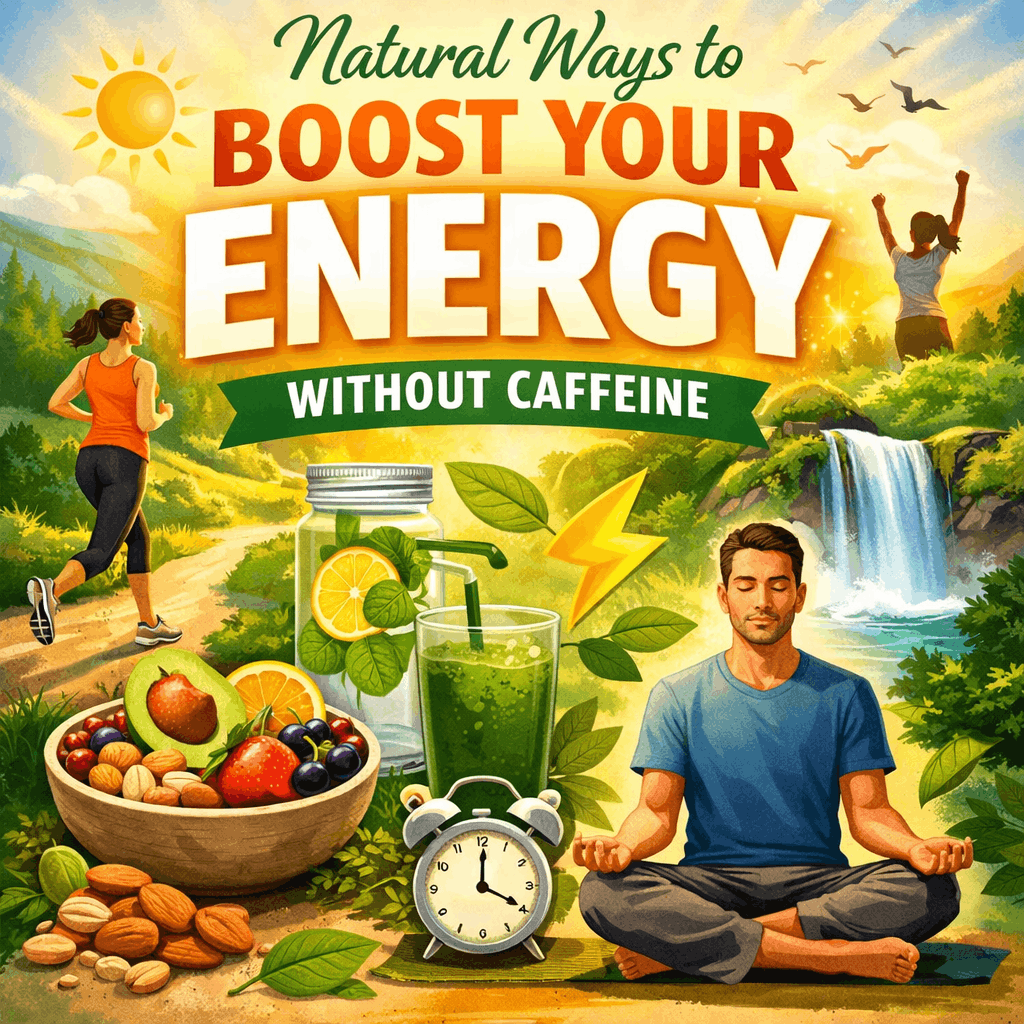
Natural Ways to Boost Your Energy Without Caffeine
Feeling sluggish but want to avoid the caffeine crash? You’re not alone. Millions of people seek natural ways to boost their energy without relying on coffee or energy drinks. The good news is that small lifestyle changes—like optimizing your sleep, nutrition, and movement—can make a big difference in your vitality. In this guide, we’ll explore science-backed strategies to help you feel more energized throughout the day.
Hydrate for Instant Energy
Dehydration is one of the most common causes of fatigue. Even mild dehydration can lead to brain fog, low motivation, and sluggishness.
How Water Boosts Energy
– Water supports circulation, helping oxygen reach your cells more efficiently.
– It aids digestion, preventing energy dips caused by bloating or sluggish metabolism.
– A study from the University of Connecticut found that dehydration can impair mood and cognitive function.
Tips to Stay Hydrated
– Start your day with a glass of water before coffee or tea.
– Infuse water with lemon, cucumber, or mint for flavor.
– Set hourly reminders if you often forget to drink water.
Prioritize Quality Sleep
Poor sleep drains energy, but improving your sleep hygiene can help you wake up refreshed.
Optimize Your Sleep Routine
– Stick to a consistent bedtime, even on weekends.
– Avoid screens 1–2 hours before bed—blue light disrupts melatonin production.
– Keep your bedroom cool (60–67°F is ideal for most people).
Power Naps for a Quick Boost
– Limit naps to 10–20 minutes to avoid grogginess.
– The National Sleep Foundation suggests early afternoon as the best time for naps.
Eat Energy-Boosting Foods
What you eat directly impacts your energy levels. Focus on nutrient-dense, whole foods.
Best Foods for Sustained Energy
– Complex carbs: Oats, quinoa, and sweet potatoes release energy slowly.
– Lean proteins: Chicken, fish, and legumes stabilize blood sugar.
– Healthy fats: Avocados, nuts, and olive oil support brain function.
Avoid Energy Zappers
– Refined sugars cause energy crashes.
– Heavy meals can make you feel lethargic.
Move Your Body Regularly
Exercise increases oxygen flow and releases endorphins, which naturally elevate energy.
Quick Energy-Boosting Exercises
– Take a 10-minute walk—studies show it can be more effective than caffeine.
– Try stretching or yoga to relieve tension and improve circulation.
– High-intensity interval training (HIIT) can boost metabolism for hours.
Manage Stress for More Energy
Chronic stress drains energy by keeping your body in “fight or flight” mode.
Stress-Reduction Techniques
– Practice deep breathing for 5 minutes daily.
– Mindfulness meditation can lower cortisol levels.
– Journaling helps process emotions and reduce mental fatigue.
Harness Natural Light
Exposure to sunlight regulates your circadian rhythm and boosts serotonin.
Tips for Light Exposure
– Spend 15–30 minutes outside in the morning.
– Open curtains or work near a window during the day.
– Consider a light therapy lamp if you live in a cloudy climate.
Try Herbal Alternatives
Some herbs offer gentle, caffeine-free energy support.
Top Herbs for Energy
– Ginseng: Shown to reduce fatigue in clinical trials.
– Ashwagandha: An adaptogen that helps combat stress-related exhaustion.
– Peppermint: Its scent can increase alertness and focus.
Final Thoughts
Boosting your energy naturally is about more than just avoiding caffeine—it’s a holistic approach that includes hydration, sleep, nutrition, movement, and stress management. Start with one or two of these strategies and notice the difference in how you feel. Ready to take the next step? Try swapping your afternoon coffee for a brisk walk and see how your energy responds.
Meta Description: Discover natural ways to boost your energy without caffeine—hydration, sleep, nutrition, and movement tips to keep you energized all day.


